
Syscall Latency Tracer
Spring 2026
A Linux kernel module that measures system call latency under varying load, built as part of an OS course project.
Overview
This was an OS course project where I built a Linux kernel module from scratch to trace system call latency. The module hooks into four syscalls (read, mmap, futex, openat) using kretprobes, records nanosecond-precision timestamps on entry and exit, and maintains per-CPU histograms to avoid lock contention. A Python test harness automated the full workflow: loading the module, spawning custom generator programs to drive syscall traffic, running the kernel stress tool at three load levels, collecting stats through /proc/syscall-trace, and producing comparison graphs. The whole thing ran on a real Linux system with kernel headers, not in a VM.
What I Worked On
- Wrote a kernel module in C using kretprobes to hook read, mmap, futex, and openat
- Recorded nanosecond entry/exit timestamps and computed per-call latency
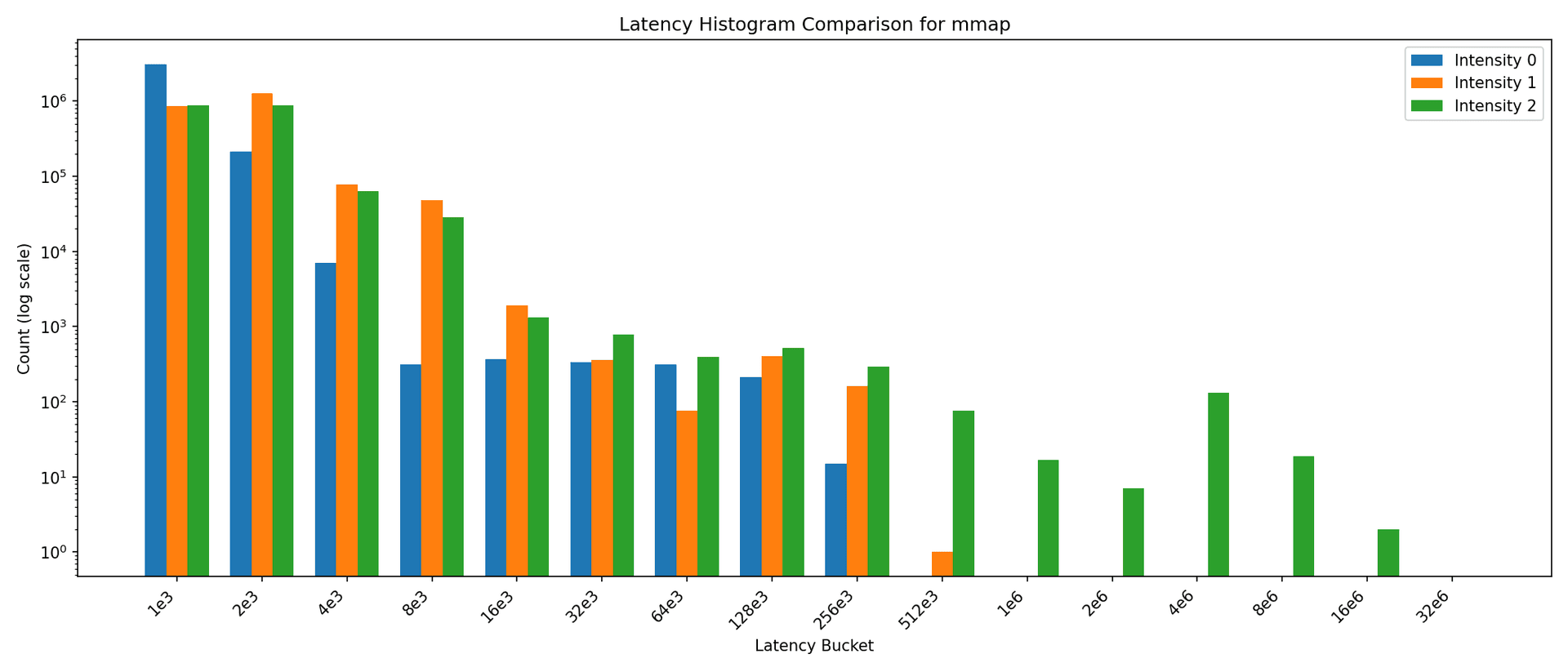
- Maintained per-CPU statistics (count, total, max, 16-bucket histogram) to avoid spinlock pressure
- Exposed aggregated results through a /proc/syscall-trace interface with custom read/write handlers
- Built custom C generator programs to produce predictable syscall workloads for each target
- Wrote a Python test harness to automate module loading, test runs, stat collection, and graph generation
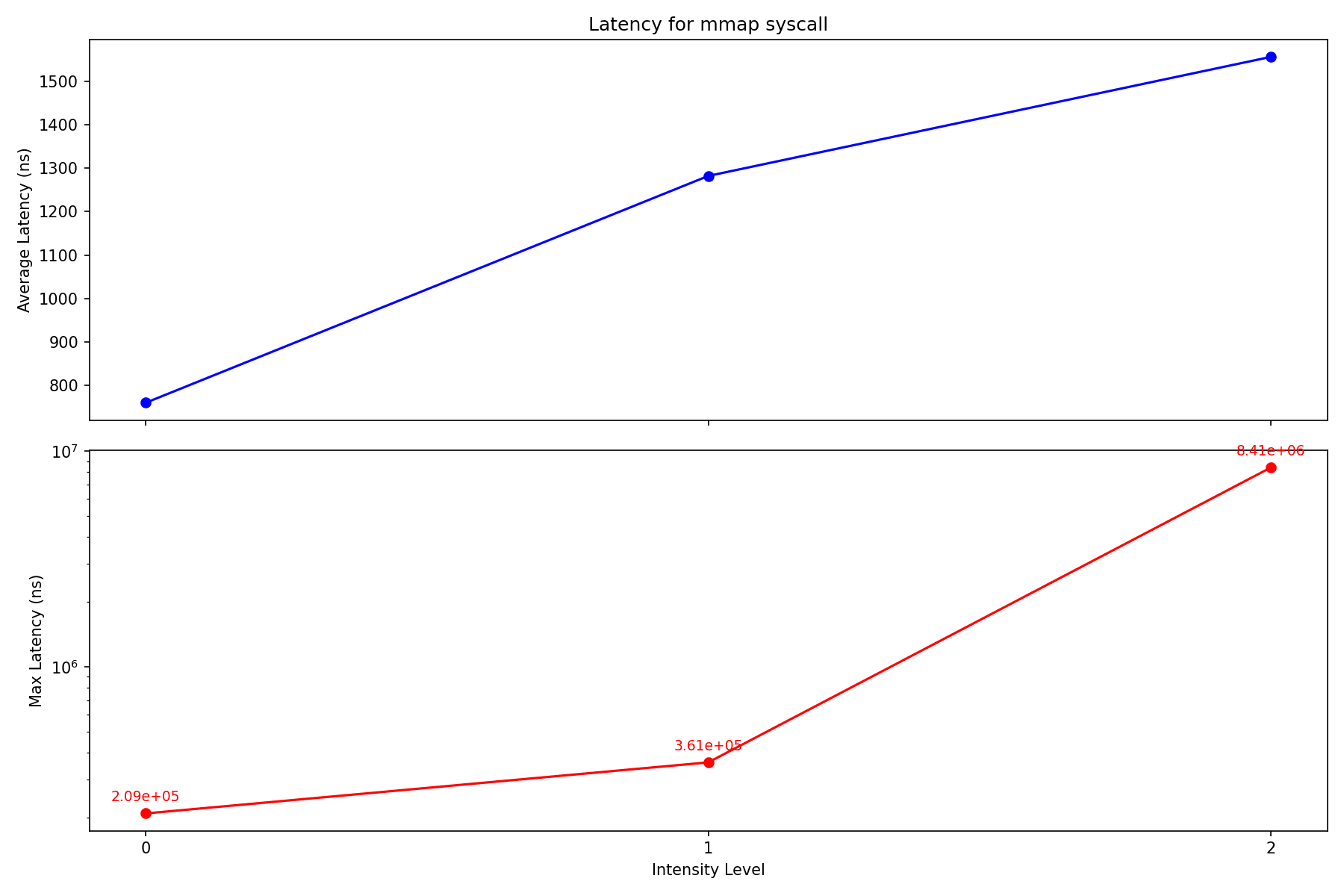
- Tested across three stress levels (baseline, medium, high) using the stress tool and psutil monitoring
- Analyzed latency distributions and produced avg/max comparison and histogram plots with matplotlib
Results
Key Takeaways
- Linux kernel module lifecycle (init, cleanup, insmod, rmmod)
- kprobes and kretprobes for non-invasive kernel instrumentation
- Per-CPU data structures and why they matter for performance
- procfs interface design (seq_file, write handlers)
- How syscall latency shifts under CPU, memory, and I/O pressure
- Debugging kernel code with dmesg and careful logging
Full write-up and notes available here.